
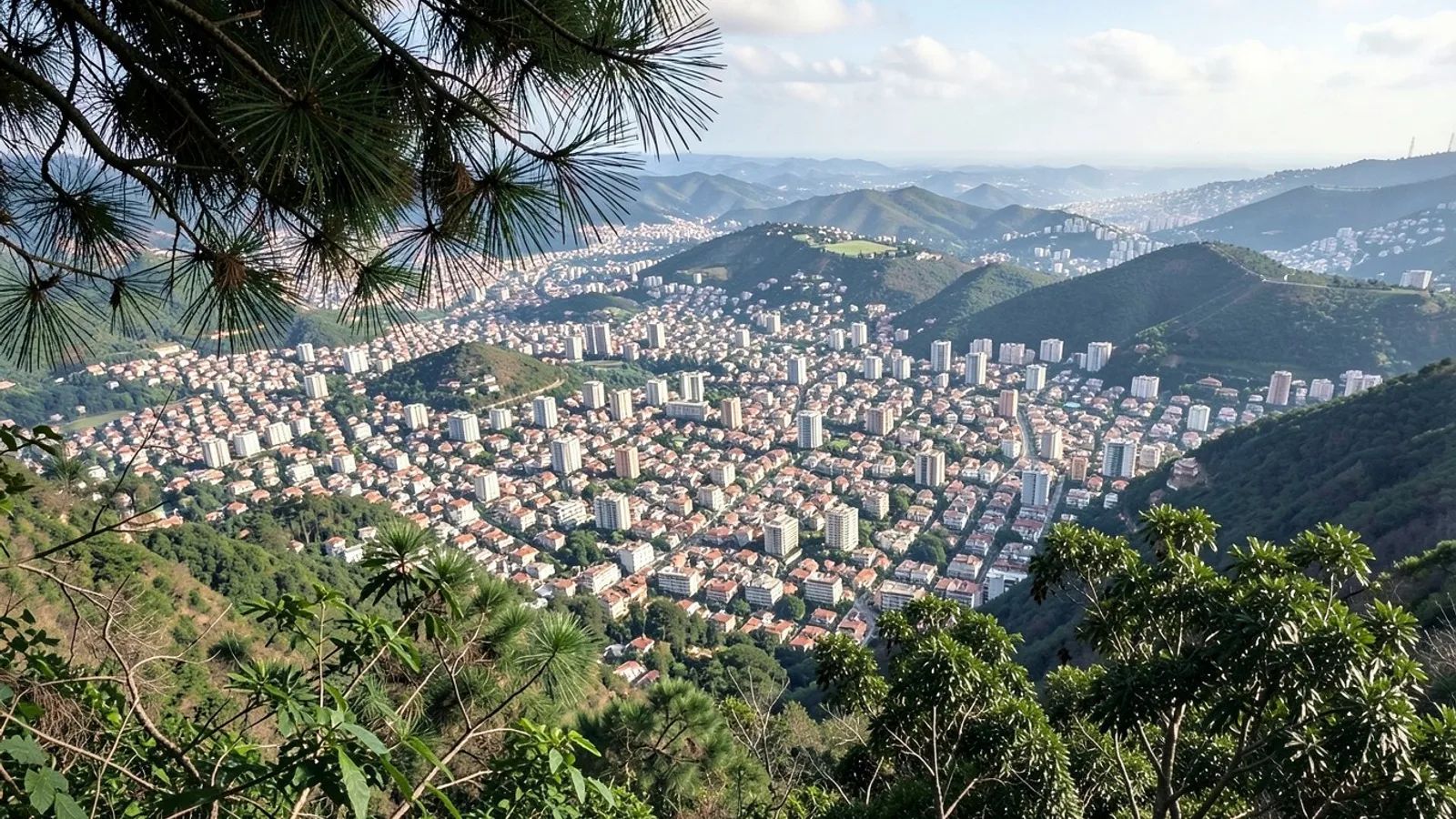
Preparing to apply for a benefit with Social Security involves fundamental technical decisions that impact a worker's entire financial life. In Poços de Caldas, a municipality in southern Minas Gerais that is home to a population of 172,339 residents, the diversity of career paths ranges from formal employment in industry, hospitality, and commerce to self-employment and periods dedicated to agricultural work. In light of successive legislative changes and complex bureaucratic requirements, the assistance of a social security lawyer makes it possible to thoroughly examine contribution histories, identify potential registration discrepancies, and build a solid legal strategy to protect rights earned over years of work. To understand how to obtain proper guidance locally, citizens can consult the legal service page and evaluate the initial steps.
Technical intervention should not be sought only at the immediate moment of applying for retirement or when a disabling health condition arises. Preventive consulting plays an indispensable role in the early diagnosis of discrepancies in the National Social Information Registry before the National Social Security Institute, correcting employment records without a registered end date or contributions paid below the statutory minimum. By seeking support provided by duly qualified social security lawyers, the insured individual avoids improperly prepared claims that often result in summary denials or in the determination of a benefit amount lower than what the law guarantees.
Retirement planning and evaluation of contribution time
With frequent updates to Brazilian social security regulations, granting a retirement pension is no longer a simple arithmetic calculation of counting months, but now requires detailed simulations across different transition rules. The guidance of a social security lawyer allows for the comparison of practical scenarios, such as the points-based transition system, the 50% toll rule, the 100% toll rule, and the progressive minimum age with contribution time. This comparative mathematical assessment prevents workers from making hasty choices that result in severe reduction factors applied to the initial monthly income, identifying the exact moment when formally filing the application will yield the greatest financial benefit permitted by law.
Another structural task of this advisory work lies in regularizing records with the National Social Security Institute. It is common to find statements with pending issue indicators that prevent the automatic validation of certain periods, employment relationships without termination records due to the bankruptcy of the employer company, or individual taxpayer contributions made under incorrect operational codes. A social security lawyer assists workers in gathering material evidence contemporary to the facts, making it feasible to supplement, group, or prove earnings so that no legally fulfilled period is discarded in the final calculation.
Proving activities performed under conditions harmful to health also requires rigorous evidence. Workers who were exposed to excessive noise, industrial heat, dust, or harmful chemical substances have their right protected to the differentiated calculation of this time or to the granting of a special retirement pension. To this end, it is essential to rigorously analyze the Social Security Professional Profile (PPP) and the respective environmental technical reports issued by employer companies. If there are final, unappealable decisions before the Labour Court, within the regional jurisdiction of the Regional Labour Court of the 3rd Region (TRT-3), this professional verifies whether the recognition of employment relationships or salary differences was properly recorded in the federal social security sphere to compose the contributory base.
Administrative Requests before the INSS and Lawsuits in Federal Court
The administrative routine of filings before the National Social Security Institute routinely runs into denials that cause great distress to insured individuals. Errors in counting contribution periods, unfavorable findings in medical evaluations, and excessive delays in reviewing cases are common obstacles faced by citizens. Faced with an adverse decision from the federal agency, the intervention of a social security lawyer becomes crucial to examine the reasons for denial and select the appropriate procedural route, whether through a formal appeal within the administrative sphere or by bringing an action before the Federal Court and the Federal Small Claims Court.
Among the most frequent claims requiring continuous technical assistance in the district, the following stand out:
- Temporary or permanent disability benefits: judicial challenges against improper medical discharges or denials of temporary disability benefits and permanent disability retirement, supporting the claim with detailed clinical reports and medical exams to substantiate an evaluation conducted by a court-appointed expert in Federal Court;
- Continuous Cash Benefit (BPC/LOAS): filing assistance claims intended for elderly individuals aged 65 or older and people with long-term disabilities in socioeconomically vulnerable situations, compiling documents that substantiate continuous expenses and the family group's income composition;
- Survivor pension and proof of dependency: demonstrating the insured status of the deceased policyholder and providing documentary proof of a stable union or financial dependency of dependents, supplementing the absence of a formal marriage certificate with other lawful forms of evidence;
- Recognition of rural activity: retrieving historic civil registry certificates, rural property deeds, and agricultural producer invoices to certify rural labor performed under a family farming regime during youth, allowing it to count toward hybrid or rural retirement pensions;
- Review of active benefits: thorough examination of the award letter and calculation summary to determine whether recognized contribution periods were improperly excluded or inflation adjustment indices were incorrectly applied.
When administrative remedies are exhausted without satisfying the citizen's rights, filing a lawsuit before the Federal Court and the Federal Small Claims Court enables comprehensive evidentiary proceedings under adversarial scrutiny. Meanwhile, residual civil disputes, probate proceedings, public registry matters, or local guardianships are handled before the State Court in the Judicial District of Poços de Caldas, whose central courthouse is located at Rua Pernambuco, 707 – Centro, Poços de Caldas - MG, CEP 37701-021. State-level appeals are reviewed by the Court of Justice of Minas Gerais (TJMG), located in the state capital of Belo Horizonte, while federal and constitutional matters may be taken to the Superior Court of Justice (STJ) and the Federal Supreme Court (STF), both headquartered in the federal capital, Brasília. All work carried out by these professionals is subject to the rules of the Legal Profession Statute and the Brazilian Bar Association, with any advance guarantee of case outcomes being strictly prohibited.
Regional integration in southern Minas Gerais and proof of employment records
The geographic location of Poços de Caldas and its position as a regional economic hub establish a continuous daily flow of people commuting between neighboring municipalities to work or study. This intermunicipal dynamic leads numerous workers to accumulate fragmented employment ties across different cities and companies throughout their careers, requiring heightened technical care in recovering evidentiary records and social security documents.
This regional reality is clearly reflected in the relationship with Botelhos, a municipality located 24.3 km from Poços de Caldas. A steady number of residents from Botelhos work in commerce, services, or manufacturing facilities in Poços de Caldas. Over decades of work, these workers often alternate between urban jobs and temporary or agricultural labor, requiring the support of a social security lawyer to recover old contracts and rectify employment records that were not properly closed in computerized databases.
Similarly, an active exchange of labor and professional activity takes place with Andradas, located 31.2 km from Poços de Caldas. The daily transit of workers employed in wine production, garment manufacturing, logistics, and general services creates diverse occupational trajectories. When leaves of absence occur due to work-related health problems or when there is a need to prove periods of work performed under hazardous or unhealthy conditions, legal assistance examines reports and contracts to ensure that every year of service rendered is included in benefit calculations.
Another prominent functional integration occurs with the municipality of Campestre, located 33.6 km from Poços de Caldas. Many workers began their contribution history in family farming or on small properties in Campestre before moving into industrial or commercial roles in the regional hub. In such cases, technical work helps establish past rural activity through contemporaneous documentary evidence, consolidating rural and urban records to secure the granting of a hybrid age retirement without reductions in the monthly benefit amount.
This ongoing movement extends equally to other neighboring cities in the region, such as Caconde, located 30 km away, São João da Boa Vista, at 31.7 km, Vargem Grande do Sul, at 34.7 km, São José do Rio Pardo, at 40 km, and Muzambinho, located 46 km from Poços de Caldas. The productive diversity found across these municipalities—which combines agricultural cooperatives, processing industries, and commercial enterprises—results in multifaceted contribution histories. Organizing documentation in advance for each career phase across the region ensures that no contributory period is overlooked by the social security agency.
Step-by-step guide to organizing social security documents and statements
The speed with which any benefit is granted and the success in building legal proceedings depend directly on the quality and completeness of the documentary records gathered by the insured person. To avoid delaying bureaucratic requests before the National Social Security Institute and to ensure reliability in legal analyses, it is recommended to adopt the following practical checklist:
- Issue the detailed CNIS statement: access the official electronic portal of Social Security to obtain the complete report of employment ties and contributions, checking whether all contracts have start and termination dates and identifying any pending status acronyms;
- Gather physical and digital Work Cards: locate all original physical copies of the Employment and Social Security Card, verifying that the admission pages, notes on job position changes, vacations, and general entries are legible and well-preserved;
- Retrieve payment booklets and contribution forms: gather bank receipts with visible mechanical authentication of payments made as an independent worker, individual contributor, or optional insured person, which are essential to validate contributions not included in the digital database;
- Request special activity reports and forms: request from the industries and companies where work involving exposure to physical, chemical, or biological agents took place the issuance of an updated Social Security Professional Profile (PPP) signed by the technical supervisor;
- Organize medical documentation for disability benefits: compile updated medical reports containing the International Classification of Diseases (ICD), the explicit description of functional limitations, prescriptions for continuous-use medications, and complementary imaging or laboratory test reports;
- Gather proof of rural activity: set aside civil birth, marriage, or baptism certificates that qualify the parents or the insured person as rural workers, in addition to public deeds of rural properties, lease or commodatum agreements, and invoices from the sale of agricultural produce from the period.
With this documentation organized in chronological order, a social security lawyer can accurately calculate actual contribution time, diagnose eligibility under the most advantageous rule, and structure administrative or judicial petitions with sound technical grounding.
Transparent legal consultation and connecting with professionals through the app
The practice of law is guided by strict adherence to the ethical principles established by the Brazilian Bar Association. When providing preventive legal advice, preparing calculations, filing administrative claims, or appearing at hearings and expert examinations in the Federal Court, the professional acts with independence and technical responsibility. In compliance with ethical standards, no social security lawyer can promise or guarantee a favorable outcome on a benefit claim, as the final decision rests exclusively with the administrative agency's officials and legally invested judges.
Financial transparency is another essential aspect of the legal relationship. All legal fees are agreed upon directly with the professional and set in writing in a service agreement before any steps are initiated. This formal instrument details the stages covered in the service, any expenses for issuing certificates, and the percentages applicable to retroactive payments if the benefit is granted, providing mutual clarity and security. To obtain institutional information on how the services work, the insured person can access the informational platform and consult the general guidelines available.
With the aim of facilitating contact with qualified professionals in Poços de Caldas and surrounding municipalities, our app provides an accessible, confidential, and free environment, without requiring prior registration with a login or password to present your question. The individual describes their situation in their own words, by voice or text. Next, an assistant organizes this information into a clear and objective summary of the case and directs the citizen to lawyer options serving that practice area in the municipality.
Users have full autonomy to choose which professional they prefer to speak with. Lawyers maintain profiles on the app detailing their practice areas and respond directly to incoming requests. The conversation takes place in a private environment within the app itself, and personal contact details are not disclosed until both parties agree to move forward. Final hiring occurs only when the client and lawyer mutually agree on the terms of the service.
If you need to carry out retirement planning, resolve discrepancies in your CNIS statement, or appeal a benefit denial before the INSS in Poços de Caldas and neighboring towns, describe your case in the app to speak privately with a social security lawyer, formalize fees in writing before work begins, and seek the protection of your rights with technical support, discretion, and without any guarantee of results.
Poços de Caldas and surroundings
Lawyers who practise in Poços de Caldas also take cases from nearby cities.
How it works
- Tell the case
By voice or text, no sign-in. It takes a few minutes.
- The assistant organises it
Facts, dates and documents become a clear summary.
- You choose the lawyer
Professionals who practise in Poços de Caldas, in alphabetical order.
Legalocal does not recommend or rank professionals: the list follows alphabetical order.
Frequently asked questions about Poços de Caldas
When is the right time to consult an INSS specialist lawyer in Poços de Caldas?
Legal guidance is recommended when planning retirement, regularizing registration issues in the CNIS, or appealing the denial of administrative applications before the National Social Security Institute. Insured individuals with ties to neighboring towns, such as Campestre, located 33.6 km from Poços de Caldas, also seek technical support to simulate transition rules before filing their application.
How can a denied INSS disability benefit be challenged in the region?
Following an administrative denial of temporary disability aid or permanent disability pension, the insured person can file a lawsuit in the Federal Court before the Federal Small Claims Court. Those who live or work in surrounding municipalities, such as São João da Boa Vista, 31.7 km from Poços de Caldas, gather detailed medical reports and complementary exams to support the court-ordered medical examination.
Is it possible to recognize special time or rural activity in Poços de Caldas and nearby cities?
Yes. Activities exposed to health-hazardous agents require proof through the Social Security Professional Profile (PPP) and environmental reports, while rural work requires civil registration certificates and rural producer invoices. Insured workers whose employment history is tied to regional towns, such as Muzambinho, 46 km from Poços de Caldas, gather these records to request conversion of special time or a hybrid pension.
How can one find pension attorneys and start consultations through the app?
Through the app, users describe their situation in their own words, by voice or text, free of charge and without requiring a login. An assistant compiles the information into a case summary and presents options for qualified professionals from the Judicial District of Poços de Caldas. The consultation takes place in a private environment within the platform, and legal fees are agreed upon formally in writing before services begin, without any guarantee or promise of outcome.